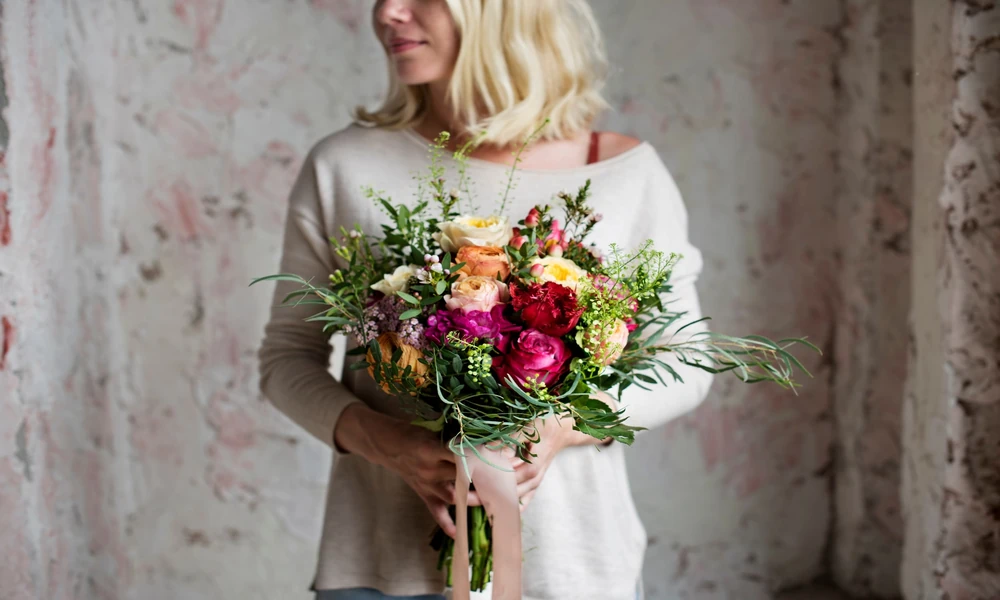

A cohesive wedding design begins with a clear understanding of the celebration’s overall style. A formal ballroom wedding may suit structured arrangements featuring roses, orchids, and carefully arranged greenery. An outdoor garden ceremony might benefit from looser floral compositions with varied textures and natural movement.
The venue’s architecture, existing decor, and lighting should influence these decisions. Flowers that appear delicate in a bright garden may need stronger colors or larger arrangements to make an impression in a spacious indoor setting.
Rather than selecting every arrangement independently, couples can develop a shared design direction based on three elements: color, floral texture, and overall shape. This approach gives each arrangement its own purpose while maintaining visual continuity throughout the event.
Let the Bridal Bouquet Set the Tone
The bridal bouquet is one of the most photographed floral elements of a wedding. Its colors and proportions can influence the appearance of other arrangements. A compact, rounded bouquet creates a traditional look, while a garden-style arrangement with loosely placed stems offers a more relaxed appearance. Cascading designs introduce movement and can complement certain gown silhouettes.
The bouquet should also be comfortable to carry. An elaborate arrangement may look impressive in photographs but become inconvenient during a long ceremony. Bridesmaid bouquets do not need to duplicate the bridal bouquet. Smaller designs using selected flowers from the main arrangement can create a coordinated appearance while allowing the bridal bouquet to remain distinctive.
Connect Ceremony Flowers With the Venue
Ceremony arrangements should complement the space rather than compete with its existing features.
For example, a venue with an ornate altar may need only a few carefully positioned floral accents. A simple outdoor ceremony setting could benefit from arrangements that help define the area where vows will be exchanged.
Important considerations include:
- Aisle flowers: Create a welcoming approach without restricting movement.
- Altar arrangements: Frame the ceremony area and complement the backdrop.
- Entrance displays: Introduce guests to the wedding’s floral theme.
- Personal flowers: Coordinate bouquets, boutonnieres, and corsages with the wedding party’s attire.
The size and placement of each arrangement should account for visibility, guest movement, and photography.
Give Reception Arrangements Their Own Character
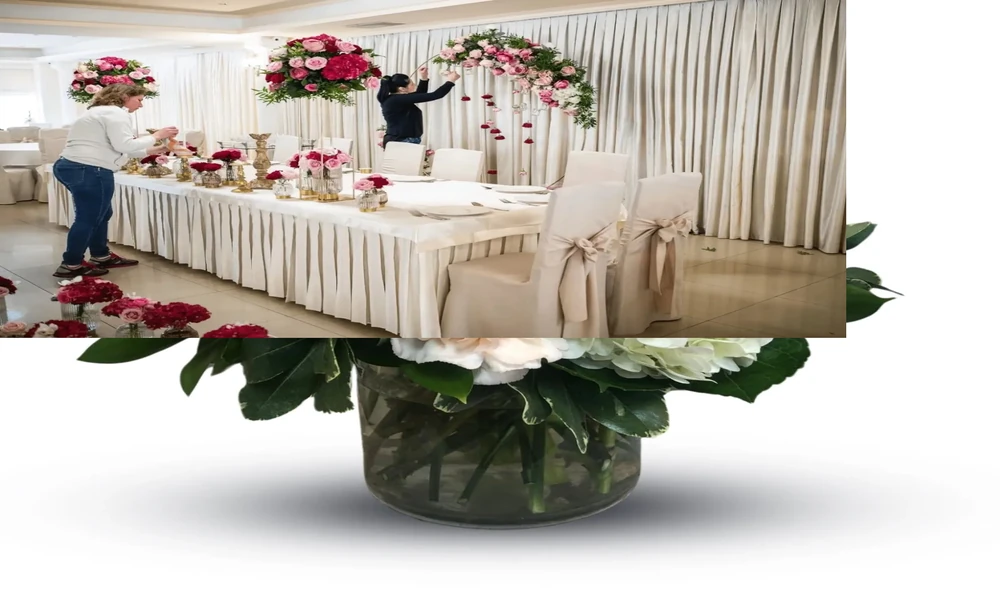
Reception flowers serve a different purpose from ceremony displays. They must work alongside table settings, conversation, food service, and the room’s layout. Couples researching Wedding Flowers Arrangements Marietta can consider floral elements such as table centerpieces, sweetheart table arrangements, cake table decorations, and smaller accent displays.
Low centerpieces help maintain clear sightlines across dining tables. Taller arrangements can introduce visual height, provided their structures do not interfere with guests or service staff. Mixing arrangement sizes can also create interest. Some tables might feature larger floral designs, while others use small bud vases with complementary blooms.
Consistency comes from repeating selected colors, textures, or flower varieties rather than making every table identical.
Use Seasonal Availability to Guide Flower Selection
Seasonal flowers can influence both the appearance and practicality of wedding arrangements. Spring celebrations often complement softer color combinations, while autumn weddings may incorporate warm tones and richer textures. Summer weddings can support bright floral palettes, although outdoor heat requires particular attention.
Some flowers are available through commercial suppliers beyond their natural growing seasons. However, sourcing conditions, transportation, and market demand can affect availability. Couples should identify their preferred overall look while remaining open to suitable substitutions. This flexibility allows floral designers to maintain a consistent color palette even when particular flower varieties are difficult to obtain.
Balance Floral Priorities With the Wedding Budget
Not every part of the venue requires an equally elaborate arrangement. A practical approach is to identify locations where flowers will have the greatest visual impact. Bridal bouquets, ceremony backdrops, and prominent reception tables often receive considerable attention. Smaller decorative areas can use simpler arrangements or greenery that complements the main floral designs.
Discussing priorities with a florist can help couples understand where larger arrangements are appropriate and where modest floral accents may work just as effectively. It is also worth discussing whether certain ceremony arrangements can be reused at the reception. Any such plan should account for transportation, timing, and available setup assistance.
Conclusion
A cohesive wedding floral design depends on thoughtful coordination rather than using identical arrangements throughout the venue. When bouquets, ceremony flowers, and reception displays share complementary colors and textures, they contribute to a celebration that feels carefully planned.
Couples considering floral design services in the Marietta area can explore the wedding offerings available through flowersofmarietta.com. Early planning, realistic priorities, and flexibility with seasonal flowers can help create an elegant floral setting that reflects the couple’s individual style.